• 11 Signs You Might Be an Empath

    If you hear “empath” and think, Oh, you can read minds? you actually wouldn’t be too far off. While the trait isn’t exactly cinematic ESP, empaths are deeply attuned to what people around them are feeling—emotionally and physically—and experience those sensations as if they were their own, often without needing to utter a word. So yeah, in a way it kinda is a superpower. Wondering if you’re a super-sensor? Here’s 11 signs you might just be an empath, according to Judith Orloff M.D.‘s The Empath’s Survival Guide

    You’ve been told you’re moody.
    Probably because…you are. If you’re an emotional chameleon, your colors have the capacity to change rapidly.

    You’ve been known as the “peacemaker” among your friends and family.
    Bad energy is especially draining for you, so you will do what you can to keep the peace. Plus, since you’re in tune with others’ emotions, you’re probably a pretty good mediator.

    You’re not one for big, loud or busy public spaces.
    If you find places like malls or theme parks strangely exhausting, it might because you don’t know how to block all those mall rats’ emotions from seeping into your psyche.

    You feel physically ill when someone yells at or gets angry with you.
    For the highly sensitive, the in-your-face intensity might just be too much.

    You find watching violence or cruelty on TV unbearable.
    Yeah, if Sarah McLachlan’s gotten you to tear up and donate, you miiiiight be an empath.

    People feel inclined to offload their problems onto you.
    Probably because you’re a great, compassionate listener, and have a problem telling people “no.”

    You have very strong intuition.
    You just kinda know things without being told. So when you make decisions, you lead with your gut.

    You feel super weird around “fake” people.
    Possibly because you can tell they’re hiding something, and it makes you uncomfortable.

    You’re drawn to holistic methods of healing.
    Reiki? Acupuncture? Tapping? You’re game. Could be because you feel a metaphysical presence that you’re trying to unpack and understand.

    You’ve felt a deep connection to nature and animals.
    Many empaths relay that being outdoors or with animals is remarkably grounding—especially because there’s an absence of negative energy from toxic friends or energy vampires. 

    You need your alone time.
    Whether it’s in nature or cozying up in bed with some mindless TV, you definitely need to get away from it all in order to recharge and feel like yourself again.


  • Office Friendships Can Hurt Your Career–A Lesson Learned The Hard Way

    BY ALLIE HOFER

    Regardless of our specific fields, we all have experience with personal relationships in the workplace. Anywhere from the daily exchange of a cheesy colloquialism to a close friendship cultivated over years of working together, it’s inevitable that the line between personal and professional will be blurred and the two sectors will intertwine. After all, the meshing of these worlds is how we successfully integrate work and life, right?

    Though some personal office relationships may sustain our working selves by enhancing the work day or even making an otherwise miserable job bearable, these connections have the potential to cause harm, too. Most office “gossip” that can circulate when coworkers become chummy tends to be superficial, fleeting, and, even if grounded in truth, irrelevant to the professional operation of the company. On the other hand, a seemingly innocuous comment about office personnel or policy — even when made under friendly, supposedly “off the record” circumstances — can have consequences that extend beyond the original sharer and listener, depending on the positions of the two friends involved.

    When one participant in an intimate conversation centered on work topics happens to be an HR representative, the stakes are suddenly raised, jeopardizing both job and friendship alike. Here’s one example from my career in HR of a relationship compromised by the complicated overlap of professional and personal lives.

    My Story

    In one of my positions, I was in charge of a few of the company’s departments, the heads of which would come to me for any HR support they needed. Elaine* was head of my largest department, a faithful Christian and young mom with whom I immediately bonded. We found ourselves together quite often, as her department had many challenging employee situations, which led to opportunities for professional development. Each of our meetings further developed a strong friendship between us, and much of our time at work diverged into dialogue about our lives outside of the company, including very personal details.

    One HR issue in particular that Elaine and I expended much energy handling was the termination of an employee named Stewart*. Given the endless nuances of the firing protocol, the whole ordeal stretched out over a year, which placed Elaine and me together for frequent discussions. She, of course, was participatory in each step toward eliminating Stewart and appeared to believe in his culpability, yet she never acted fully in support or in favor of expediting the process. During one of my meetings with Elaine, she presented some additional evidence that would help to build the case for Stewart’s termination, evidence that he himself brought to her. But when she shared it with me, she insisted I disregard it, and, on top of that, keep it secret from my boss. Talk about a mic drop! This conversation was riddled with the crossing of boundaries and the uncomfortable entanglement of personal and professional.

    The fact that Stewart had willingly surrendered this evidence to Elaine proved that he trusted her and did not see her as a threat to his job. And Elaine’s request to keep it under wraps established that she was not as committed to his termination as we had thought, her professional discernment most likely clouded by personal convictions. Now consider how Elaine’s and my friendship influenced a work situation that should have been unadulterated by “life.” Would she have asked me so casually to breach policy had we not been such close confidants in the personal arena?

    After taking some time to deliberate and chat it over with my husband, who also happens to be in HR, I met with Elaine and conveyed to her the weight of what she had asked of me. Put simply, I could not let our personal confidences contaminate our professional relationship. It’s a tough conversation to have, especially female to female. And ever since then, we’ve grown apart, and our friendship was forever changed.

    The Gist:

    How this experience has impacted my career:

    This experience, though emotionally painful at the time, was crucial in solidifying my career choice and assuring me that HR is the right fit for me. In order to survive in this department, you must be willing and able to draw the imperative line between personal relationships and your professional responsibility to protect all employees’ jobs and the company at large. Sharing how I handled the above situation has instilled trust in the managers of my subsequent positions, serving as proof that I place loyalty to my job in front of office relationships. Every time I deal with an employee, this story comes to mind and inspires me to uphold my professional commitments and prioritize personal issues accordingly.

    What you should learn from my story:

    • Whether you work in HR and are close to some of your fellow employees, are friends with someone in your company’s HR department, or you connect with a seemingly neutral office pal, be extremely mindful of what you say and do in the workplace. Do not let emotion rule, and think carefully through each word you speak and action you take with every person you interact with — especially when it comes to email.
    • Forgiveness is not as free-flowing in the workplace as it is within personal relationships. Irrational, careless mistakes made in the heat of the moment will follow you and have the potential to jeopardize your career.
    • Many scenarios will arise that force you to choose between your the personal and the professional. Remember that your job is not the only one at stake, and be sure not to endanger anyone else’s career for the sake of maintaining your own job or a relationship.
    • Above all, do not to be afraid to have the tough conversations! Even though you will likely be uncomfortable and may suffer on a personal level, you will not regret doing what is right in the grand scheme, and you can rest easy knowing you were respectful, diplomatic, and professional.

    *Names have been changed to protect the identities of those involved.

  • What Would You Sacrifice to Work from Home?

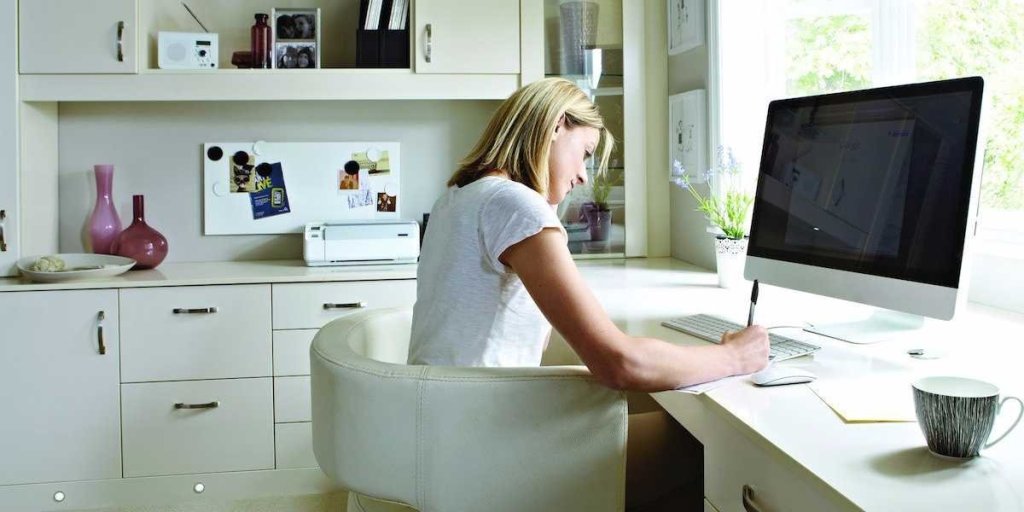
    Working from home is often the most esteemed and coveted of all flexible employment arrangements. With this in mind, if you had the potential to work remotely and make a choice on benefits, what would you sacrifice to work from home? Would you be willing to make a sacrifice? Should you even have to?

    According to FlexJobs’ survey of people who want flexible jobs, we came across some interesting benefits that people would be willing to give up in order to have the ability to work from home. There were also equally interesting and entertaining benefits willing to be sacrificed by employees in an infographic titled “Telework – Flexible, Effective, & Seamless.”

    Let’s take a look at what employees are willing to sacrifice in order to work from home.

    What FlexJobs’ survey respondents would sacrifice:

    • 22.9% – Take a 10% cut in pay
    • 22.9% – Take a reduction in hours
    • 22.5% – Health benefits
    • 21.8% – Some vacation time
    • 17.9% – Work longer hours
    • 16.2% – Employer-matched retirement contributions

    At FlexJobs, we don’t think you should have to give up anything in order to work from home…except maybe your long commute, frustrating coworkers, and office politics! But we’re amazed to see just how important being able to telecommute is to professionals.

    Before you really do give up something in order to work from home, check out our tips on How to Negotiate a work-from-home arrangement! (below)

    Benefits willing to be given up (see infographic):

    • 34% – Social Media
    • 30% – Texting
    • 29% – Chocolate
    • 25% – Smartphones
    • 20% – Shopping
    • 17% – A pay raise
    • 15% – Half of vacation days
    • 12% – Showers
    • 5% – A spouse

    What Would You Sacrifice to Work from Home infographic

    How to Negotiate a Work-from-Home Arrangement

    Finding a way to work from home may not always require pounding the pavement and looking for a brand-new job. It might be possible to negotiate a work-from-home arrangement wherever you are now. If you’re currently working, and if your boss is open to the idea, you may be in prime position to strategize your way to working remotely, perhaps part-time if not full-time.


    Here are some suggestions for how to negotiate a work-from-home arrangement:

    Talk it up.

    When you are ready to negotiate a work-from-home arrangement, you may want to run through a few work-at-home options with your supervisor—full-time telecommuting, working partly from home and partly from the office, a flexible schedule arrangement, or some mix that meets everyone’s satisfaction. A sit-down with your supervisor can go a long way toward persuading your boss to give a work-at-home situation a try. Go in fully armed, have your talking points ready, and be fully prepared to build your case.

    Write it up.

    Once you’ve laid the groundwork, a written proposal can both formalize the idea and give you a chance to emphasize that remote work offers benefits for the company as well as for you. This is your chance to debunk some of the myths about telecommuting—that workers are less productive and that they miss out by not having face-time with colleagues, to name just two.

    Take a trial run.

    You’ve gotten the green light for a test run—good going! Now’s your time to demonstrate how well you can adjust to working from home, and how good a deal it is for you and your boss. This is probably the most crucial period of your “negotiation.” Do your best to keep the quality of your work high and to produce as steadily at home as you do in the office.

    Be prepared to tweak.

    If a work-from-home setup is breaking new ground for you and your employer, there’s bound to be some trial-and-error involved. See what works and what doesn’t. For example, if your trial involves working from home for only part of your workday or workweek, figure out if some days are better than others to work remotely, or if mornings are better than afternoons.

    If not now, maybe later.

    If your powers of persuasion aren’t enough to convince your boss to allow you to work remotely, it may be a matter of timing. The push for work flexibility is gaining traction, and there’s mounting evidence that telecommuting is good for business and workers. Think about approaching your boss again in the future. If things still don’t work out, it may be time to set your sights elsewhere to find a job with a flexible schedule! Sometimes it is better find a new job than repeatedly attempt to negotiate a work-from-home arrangement.

    Readers, share your tips for how to negotiate a work-from-home arrangement!

  • 6 Telecommuting Hard Realities No One Tells You About

    Article creator imageBY ANNAMARIE HOULIS

    Woman Working at Home

    Photo credit: Pixabay

    Before I took the leap to freelancing full time, I’d assumed that telecommuting would mean never wearing pants and getting to answer emails from the comfort of my bed. Certainly, there are those elements. But there’s a lot more to it than I’d never anticipated, and there are some legitimate challenges.

    Telecommuting is work arrangement in which the employee works outside the company’s office space, typically from home, coffee shops, libraries and other remote co-working spaces. The employee communicates with employers, colleagues and clients via telephone, email and communication applications. Sometimes, the employee might pay visits to the office to attend meetings and to touch base with employers, but there’s less and less of a need to do so as face-to-face interaction is replaced by virtual face-to-face interaction via mobile and desktop screens.

    A report on telecommuting in the United States from FlexJobs and Global Workplace Analytics, 2017 State of Telecommuting in the U.S. Employee Workforce, found that 3.9 million U.S. employees who make up 2.9 percent of the total U.S. workforce work from home at least half of the time. In fact, there’s been a 115 percent percent increase in telecommuting between 2005 to 2015 (up from 1.8 million in 2005). Perhaps the increase is because working from home is an attractive opportunity, never mind the fact that the average annual income of telecommuters is $4,000 per year higher than those who work on-site.

    Forty percent more U.S. employers offered flexible workplace options in 2017 than in 2010, which has given employees a lot more freedom regarding both work location and work hours, plus more flexibility to balance work and personal obligations. Working from home also makes a lot of people more productive in that they don’t have to waste time commuting to and from the office, and they can handle their daily responsibilities devoid of workplace distractions. A report released by the company Chess Media Group found that 90 percent of workers actually believe that an organization offering flexible work environments is more attractive than an organization that does not offer any opportunities to work remotely.

    Telecommuting also benefits employers in that it allows them to work with top talent, regardless of location. Because those employees are likely to be happier in their jobs, it also leads to greater employee retention. Therefore, another advantage of telecommuting for an employer with a telecommuting policy is, often, better work. Because an employee with a telecommuting job has a better work-life balance, their morale is boosted, which subsequently boosts employee performance. Likewise, it of course saves companies money in office expenses like equipment, amenities and more — plus rent and utilities if they choose to forgo an office altogether.

    Theoretically, a lot of us don’t need offices anyway. New technologies allow employees to stay connected so long as they’ve got an internet connection. Services like Slack and Google Hangouts allow employees to keep in quicker communication than email itself, and virtual conferencing platforms like Skype for Business allow them to meet face to face through their screens. Google Drive allows employees to create assets and seamlessly share and peer edit documents, presentations and spreadsheets, as well. Besides, according to Forbes, millennials, who are very used to being connected online, are projected to be the majority of the U.S. workforce by 2020, which is just around the corner.

    But it’s important to look at telecommuting as a business strategy, not a perk. Telecommuting is not for everyone. For example, not everyone can do their jobs from home. Many client-facing jobs, for example, require employees to be in the office for meetings; some sales jobs require a more personal level of communication and some more manual jobs require equipment that employees just don’t have at home. But the challenges of telecommuting go beyond practicality.

    Off-site work isn’t always easy. As a former full-time employee of a media company with a somewhat flexible work arrangement, and now a full-time freelance writer with a completely flexible work arrangement, no office space, remote work and my own work schedule, I can tell you from firsthand experience that there are challenges to telecommuting. My work-life balance has indubitably improved, and I certainly prefer off-site work, but it’s not as easy as it looks. There are some harsh realities of telecommuting that no one tells you, and here’s what I mean.

    1. You have to motivate yourself.

    When you don’t have to be at an office at a certain time with someone there to hold you accountable, you have to motivate yourself to get up and get working every morning. It’s therefore even more important for telecommuters to enjoy their line of work so that they will push themselves to perform at their best.

    For me, waking up each morning to get writing is not a challenge because, to me, work doesn’t feel like work. But I do find that I struggle to wake up as early as I was before because I tend to be more productive late at night instead. While I still get my work done, my sleeping schedule is off and sleep deprivation can lead to a whole host of issues that could affect your work.

    2. You might find yourself working around the clock.

    When I was working at an office, I’d go in at 9:30 in the morning and I’d leave around 6:30 in the evening. While I did have side jobs to do when I got home, the day’s work for my full-time job was done. I really couldn’t do more work if I’d wanted to because most of my colleagues (except those in other time zones) were also signed off for the day — no more meetings and no more emails.

    Now that I’m working as a remote writer full time, I find that I’m pretty much always working or that there’s at least always work I could be doing. I’m on the clock 24/7, writing and answering emails at all hours of the night as I’m working for clients in multiple time zones. I’ve downloaded the minimalistic to-do list app TeuxDeux, to get myself into a routine and set schedules so that I can better organize my days. Whatever I don’t finish one day automatically moves to the next day so I can easily keep track of my responsibilities.

    3. You have to try harder to establish your presence.

    While a telecommuting policy can promote a better work-life balance, face-to-face communication and face-to-face interaction are still instrumental in the workplace. Any full-time employee should get to know the people with whom they’re engaging on a daily basis.

    It’s easier to make your presence known within a company when you’re physically present at the office. When you’re remote, however, it can be harder for colleagues and employers to get to know you, which inevitably makes it harder for them to trust you on projects. We already know that women have a more difficult time finding sponsors to advocate for them in their careers, so building rapport with colleagues and employers is critical.

    I’ve been showing up at more networking media events and co-working with other freelancers in order to keep myself present in the industry. As for making sure my employers think of me for opportunities, I keep in almost daily communication with most of them and have regular Skype check-ins with some, too.

    4. You might not see civilization all day.

    An office is also a social setting, and a lot of people make their closest friends at work. Many offices have communal kitchens and common spaces where coworkers can sit together, eat lunch and catch up, on top of talking business.

    But when you work from home, you don’t necessarily have to leave the house all day, which means that, if you live alone, you might not see anyone else all day. It’s easy to get sucked into your computer once you get going and, if there’s a lot of work to get done, the day could fly by before you know it. I, therefore, always make the effort to get up and leave my apartment before I get sucked into it. I spend the bulk of my time in local coffee shops where I can be productive but surround myself with other remote workers, and I make sure to take a break to go to my kickboxing classes or meet friends for a few hours (and usually get right back to work when I get home).

    5. You’ll probably spend more money.

    Because I spend a lot of time in coffee shops, I spend a lot more money than I did when I was cooped up in an office with free coffee and snacks all day. When you squat at coffee shops or cafes, you’re pretty much socially obliged to make at least one purchase. In New York City, where I live, I spend about $20 a day minimum on chai lattes and lunch at the places from which I work. That adds up — though it does help that I’m no longer spending over $100 on commuting costs every month.

    6. Vacations might become harder to take.

    Because I’m very used to working from anywhere, I tend to have trouble separating work and play. In other words, my life always feels sort of like a “vacation” in that I can be anywhere whenever I want — like, say, the beach — but I have difficulty actually tuning out of work when I’m on a real vacation.

    High stress, guilt and workload concerns are primarily keeping women from using their time off, according to Project: Time Off’s report, State of American Vacation 2017. But vacationing is good for your health and can prevent against burnout. It promotes a renewed sense of purpose outside of work, allows time for otherwise neglected self-care rituals like much-needed sleep and relieves stress, which reduces the risk of developing both mental and physical health risks over time. Plus, According to “An Assessment of Paid Time Off in the US,” commissioned by the US Travel Association, taking time off leads to higher productivity and overall morale — which, in turn, naturally leads to greater employee retention.

    But being able to work from the beach means that you might be more inclined to be answering emails from your phone while laying in the sand.


  • 5 Ways to Be a Better Worrier

    We know that worrying can help you live longer, but when anxiety hits (OMG, why do you have three missed calls from your sister?), it can be hard to silence. (She just wanted to tell you she got promoted, sheesh.) These simple strategies can help you put things in perspective—and worry more productively, too.

    woman texting

    TWENTY20

    SCHEDULE A TIME TO WORRY

    Those missed calls from your sister? The worry can be crippling if, when you phone her back, she doesn’t pick up. But take a beat and look at the clock. Say, it’s 2 p.m. Tell yourself: If you don’t hear back from her by 5 p.m., you can resume worrying then. After all, the two of you talk all the time and she probably just had a random question—no need to sound the panic alarm just yet. By scheduling a time to worry, you’re giving yourself permission not to worry in the interim and go on with your day. (Sans elevated blood pressure.)

    woman journaling

    TWENTY20

    WRITE (OR TYPE) YOUR WORRIES OUT

    Here’s the thing: A worrier’s brain is always ten steps ahead when it comes to all the things that could possibly go wrong. To calm your nerves, bust out a pen and paper (or the Notes app on your smartphone) and jot down any fears that might be weighing you down. Seeing them on paper will help you put them in perspective, but most importantly stop them from swirling around in your head.

    woman talking

    TWENTY20

    TALK THROUGH THE EVIDENCE VS. THE HYPOTHETICAL

    You’ve got a big work presentation coming up that you’re certain you’re going to botch. Call a friend, tap your spouse or talk the situation through out loud to yourself: What evidence do you have that the presentation will be a total bust? (Did you prepare? Did someone say something to you?) How much of your anxiety is you letting your brain run wild? (Uh-oh, what if the PowerPoint file is corrupt?) Considering your worries—ranging from rational to irrational—allows you to consider the solutions, too. (For example, a simple fix to the potential for a PowerPoint file error is to save a duplicate. Worries averted.)

    woman deep breath

    PEOPLEIMAGES/GETTY IMAGES

    PRACTICE A CATHARTIC BREATHING TECHNIQUE

    Shallow breathing is one of the easiest ways to exacerbate worry and stress. Pick a deep-breathing technique (we’re huge fans of umbrella breathing) when you feel nerves and anxiety coming on and focus your attention on your breath. Deep and measured breaths have a meditative and calming effect, super helpful when worries are on the rise.

    woman reading

    TWENTY20

    CHOOSE A WORTHY DISTRACTION

    A book you can’t put down. A Netflix series you’ve been waiting to binge. Basically, you just need something that will take your mind off whatever’s giving you jitters. Even an hour break from letting your mind obsess over your fears can be enough to offset worry. Just be sure the distraction is something that will actually distract you. (It doesn’t help if the book you choose leaves you reading the same words on the same page over…and over again.)